
Who we serve

Services

More

Book a Blind Spot Hunt Call (888) 304-2529

Warehouse security guide

How to stop a fake pickup at your gate

A fake pickup shows up on time, with clean paperwork and a good story. How the trick works, why the usual checks miss it, and what to check before a load leaves.
By Galaxy Security · Updated October 2026 · 7 min read

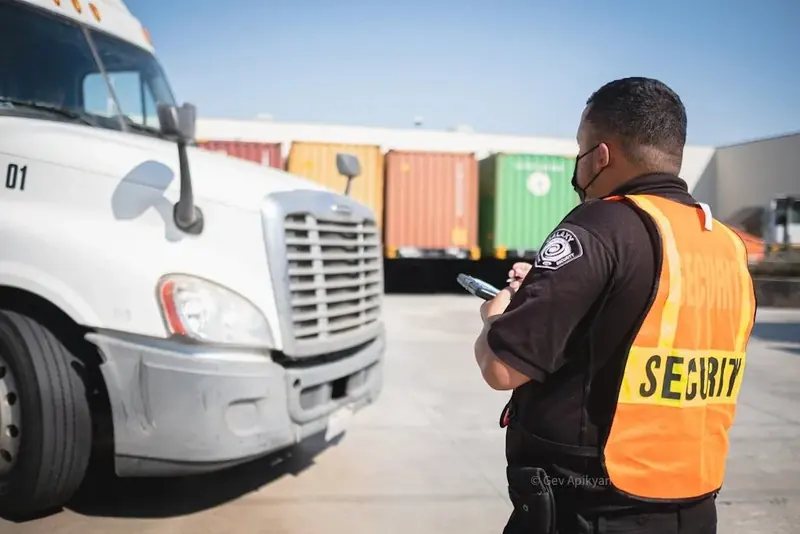
A Galaxy officer checking a semi truck at the gate
A Galaxy officer at a truck gate. Our team, not stock photos.

Nobody cuts your fence. Nobody trips an alarm. A truck shows up on time, the driver has the right load number and a good story, and your own team loads the freight and waves it out. You find out later, when someone calls about a missing load.

Here's how it works, why it gets through, and what to check before a load leaves your gate.

What a fake pickup is.

A fake pickup, also called a fictitious pickup, is when a thief poses as a real carrier and drives off with a real load. It's theft by deception, not force. In the numbers below, you'll also see it called a deceptive pickup.

From April to June 2026, fake pickups were 158 of 677 cargo thefts, nearly 1 in 4. They barely moved from 165 a year earlier, while all incidents fell 26%.

Source: CargoNet Q2 2026 analysis

Nearly 1 in 3 US cargo thefts in 2025 used deception, not force.

Source: BSI Consulting and Munich Re Specialty, via Risk & Insurance

In Southern California, deceptive pickups grew from 24% to 28% of incidents, July 2025 to June 2026.

Source: Overhaul Q2 2026 report, via Truck News

How they get past you.

These aren't amateurs with a bad fake ID. Public warnings describe a few ways in.

  • They become a real carrier. In April 2026, the FBI warned that criminals break into broker and carrier accounts, pose as real companies and redirect the freight. The real carrier may not know its name was used until someone calls about a missing load (FBI).
  • They borrow real numbers. A truck can show a real carrier's USDOT number without that carrier knowing (FMCSA advisory).
  • They change the contact details. The FBI says thieves can change a real carrier's contact details on file with the federal government. Then the phone number you look up can reach the thief (FBI).
  • They fake the phone call. CargoNet warns against trusting a call saying the driver is at the shipper, because the number can be spoofed (CargoNet).
  • They use a real company as cover. In 2026, a federal jury in Los Angeles convicted two men of conspiracy to commit theft from interstate or foreign shipments. Prosecutors say real trucking companies were bought or used to bid on real shipping contracts. One cost about $22,000, and a load of TVs picked up in Fontana was never delivered (US Attorney release).

Why the usual checks miss it.

  • Good paperwork. A clean bill of lading tells you the paperwork looks right, not that the driver is who they say. The FBI's words: “Familiar names or email addresses alone do not confirm authenticity” (FBI).
  • A carrier lookup. A lookup shows a company is registered. It doesn't prove who's at your gate.
  • The name on the door. Federal rules let that name be a removable sign (49 CFR 390.21T).
  • Cameras. A camera records a fake pickup. It can't compare the driver to your records. More on that in cameras or guards at the warehouse gate.

Red flags to take seriously.

None of these proves a thing on its own. Each one is a reason to slow down and check.

  • A last-minute change. An email changing the carrier or the pickup time, right before the load is due.
  • “The driver's already there.” A call pushing you to load now (CargoNet).
  • An end-of-day pickup. A truck that shows up when your team is tired and trying to get out (CargoNet).
  • A cheap rate on a load nobody wants. CargoNet says that can be a setup (CargoNet).
  • Names that don't line up. The carrier or driver doesn't match the paperwork from your broker (J.B. Hunt).
  • A pushy driver. Early, late or at the wrong door, and wants to be loaded anyway.

Six checks before a load leaves.

Most of these come from the FBI, CargoNet and J.B. Hunt. No check catches everything, so use them together.

Know who's coming before they arrive.

Do this
Keep your own record of every expected pickup: carrier, driver, truck, load and time.
Why
The record has to come from you, not from the driver. Anything the driver hands you was made to pass.

Check at the gate, not at the door.

Do this
Compare the driver, carrier, truck and load against your record before the truck gets near a door.
Why
J.B. Hunt says the carrier and driver should match the paperwork from your broker, and to check the placard and the driver's photo ID (J.B. Hunt).

Verify a second way.

Do this
Call the carrier back on a number you already have. Never use the number in the email or the one the driver gives you.
Why
The FBI's words: “Independently verify shipment requests and pickups using secondary methods prior to releasing any loads” (FBI, April 2026).

Use a pickup code.

Do this
Give each load a unique code, and give it only to the approved carrier.
Why
Only someone you gave it to should have it. It's J.B. Hunt's advice to shippers (J.B. Hunt).

Photograph the pickup.

Do this
Keep photos of the driver, the license, the truck, the plates, the truck number, and the DOT and MC numbers.
Why
The FBI says this helps investigators and may help disrupt ongoing theft schemes (FBI, April 2026). J.B. Hunt adds the bill of lading and the seal, and says to mount the check-in camera low enough to see a face under a hat (J.B. Hunt).

Give someone the authority to say no.

Do this
Put one person in charge of every mismatch, on every shift. That person can pull a truck over and keep a load on the dock.
Why
A check only works if someone can act on it. That matters most late in the day: CargoNet says end-of-day pickups need a second look from a supervisor (CargoNet).

How tight is your gate?

Tap every one that's true at your site today, on every shift.

0/ 8

Tap the ones that are true.

When something doesn't match.

  • Keep the load where it is. Nothing gets loaded until it's cleared. If it's already on the trailer, don't release it.
  • Pull the truck over. Move it out of the lane so the rest of the line keeps going.
  • Stay calm. Nobody has to accuse the driver of anything. “We need to confirm this before we load” is enough.
  • Call on a number you already have. Reach your broker or the carrier directly, not through the number on the paperwork.
  • Keep the record. Save photos, footage and the paperwork, and write down who, what and when.
  • If the driver leaves, let them leave. Don't try to stop the truck yourself. Note what you can and call the police.

Ask your broker one question.

If we hand a load to a fake driver, are we covered? Ask before you need the answer. In one reported case, a $216,271 stolen load wasn't covered because a freight broker's policy excluded dishonest acts of third parties (Avalon Risk Management). That's one case and one policy. Yours may read differently, so have your insurance broker tell you in writing.

What this looks like with Galaxy.

Every truck is logged in and checked against the records you give us. Matches go in. The rest get pulled over. Visitors are signed in and out. You see it live from your phone or laptop, and you get a summary every morning. No security company can promise nothing ever gets through. What you get is a check at every truck, and a record of it.

See how it works for warehouse security officers, 3PLs and cross-docks and trailer yards. Read next: signs your warehouse is becoming a target.

Paper log or on record.

Paper log
Truck inLooked at the driver's paperwork
Not on record
Truck inNo record of who cleared it
Not on record
Yard patrolNo proof of when
Not on record
The nightRebuilt from memory
Not on record
On record
Truck in
9:41 PMLet inChecked against your records
Truck in
10:12 PMPulled overDoesn't match your records
Yard patrol
1:15 AMOn recordCompleted
Night summary
7:00 AMIn your inboxSent to you

Illustration with example entries.

Check your own gate.

Question 1 of 2

When a truck pulls up, is it checked against your own pickup list before it gets near a door?

Catch the signs early, on record.

With Galaxy, every truck, visitor and patrol at your site goes on record, so small signs show up before they become a loss. You watch it live from your phone or laptop.

Your site Live
  1. 7:00 AM Night summary In your inbox
  2. 11:05 PM Truck out Matches the approved trailer On its way
  3. 10:40 PM Visitor Signed out
  4. 10:12 PM Truck in Doesn't match your records Pulled over
  5. 9:58 PM Visitor Signed in
  6. 9:41 PM Truck in Matches your records Let in
Illustration with example entries. Your real view is built around your site, and you see it during your Blind Spot Hunt.
  • Trucks logged in

    Checked against the records you give us. Matches go in. The rest get pulled over.

  • Visitors signed in and out

    You know who is on site, and when they left.

  • Live, any time

    Watch it as it happens, from your phone or laptop.

  • A morning summary

    The night, in your inbox before your first meeting.

  • Incidents on record

    Written up and locked, ready for your insurer.

  • The owner on the line

    A direct line to the owner. Not a call center.

Questions managers ask.

What is a fake pickup?

A fake pickup, also called a fictitious pickup, is when a thief poses as a real carrier and drives off with a real load. There's no break-in. Your own team hands the load over.

How do I verify a carrier before a pickup?

Keep your own record of the expected carrier, driver, truck and time. Check every truck against it at the gate, check the driver's photo ID, and confirm any change by calling back on a number you already have. Don't use a number from the email or from the driver.

Does a carrier lookup prove the driver is real?

No. A lookup shows a company is registered. It doesn't prove who's at your gate. The FBI says thieves change a real carrier's contact details and insurance information, so a clean lookup can still lead to the thief.

Can cameras stop a fake pickup?

Not on their own. A camera records a fake pickup, and the record helps afterward. Stopping one takes someone checking each truck against your records before the load leaves.

What should I do if a load already left with the wrong driver?

Call the police and your insurer, call the real carrier on a number you already have, save the camera footage and photos, and write down who, what and when while it's fresh.

Will my insurance cover a fake pickup?

It depends on your policy, so ask your insurance broker directly: if we hand a load to a fake driver, are we covered?

What is a Blind Spot Hunt?

A free walk of your gate, yard and docks with Galaxy. You keep a written Blind Spot Report: every blind spot, the top three fixes and draft post orders, even if you never hire us.
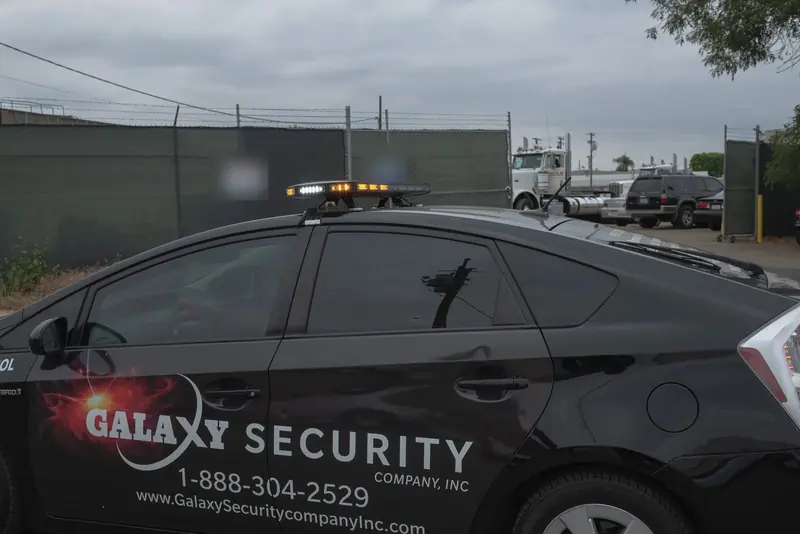
A Galaxy patrol car in a fenced truck yard

Show us your operation.

We'll walk it with you, hunt down every blind spot and show you what you'd see live.

  • Every blind spot, handoff by handoff
  • Ready to hand to your boss, a customer or your insurer
  • Yours to keep, even if you never hire us

Galaxy takes on a limited number of new clients at a time. Each site needs vetting and site-specific training.

Logistics + manufacturing security · PPO #120873

Not ready to talk? Score your site first.

Ten questions, two minutes. See where your gate, yard, docks, seals and nights stand, handoff by handoff. No call needed.

Take the Gate Scorecard
  • GateOn record
  • YardPartly
  • DockPartly
  • SealSlipping
  • After hoursPartly
Sample result. Yours shows the moment you finish.